The Red Wheelbarrow Poem: A Comprehensive Exploration
Accessing “The Red Wheelbarrow” in PDF format facilitates detailed study and analysis of William Carlos Williams’ iconic work.
Critical analyses, like those found online, are often available as downloadable PDFs,
providing deeper insights into the poem’s symbolism and minimalist structure.
New Directions Publishing offers collections including this poem, and scholarly resources frequently present the text
alongside interpretations in a convenient PDF format for educational purposes and personal enjoyment.
This accessibility enhances understanding of its lasting influence.
Historical Context of William Carlos Williams
William Carlos Williams (1883-1963) emerged as a pivotal figure in early 20th-century American poetry, deeply influenced by the burgeoning Modernist movement. He deliberately rejected the traditional, often ornate, poetic styles prevalent at the time, favoring a direct, vernacular language rooted in everyday American experience. This shift coincided with a period of rapid industrialization, urbanization, and social change in the United States, impacting artistic expression.
Williams’ medical profession – he was a practicing pediatrician – profoundly shaped his poetic vision; Observing the lives of ordinary people, particularly those in his working-class neighborhood in Rutherford, New Jersey, instilled in him a commitment to representing the beauty and significance of the mundane. He sought to capture the essence of American life without the filters of European literary tradition.
The post-World War I era witnessed a disillusionment with established norms and a search for new forms of artistic expression. Modernist poets like Ezra Pound and T.S. Eliot experimented with fragmented forms and unconventional imagery. Williams, while engaging with these trends, forged his own distinct path, emphasizing the importance of “no ideas but in things,” a philosophy that prioritized concrete observation over abstract concepts. This context is crucial for understanding the simplicity and directness of poems like “The Red Wheelbarrow.”
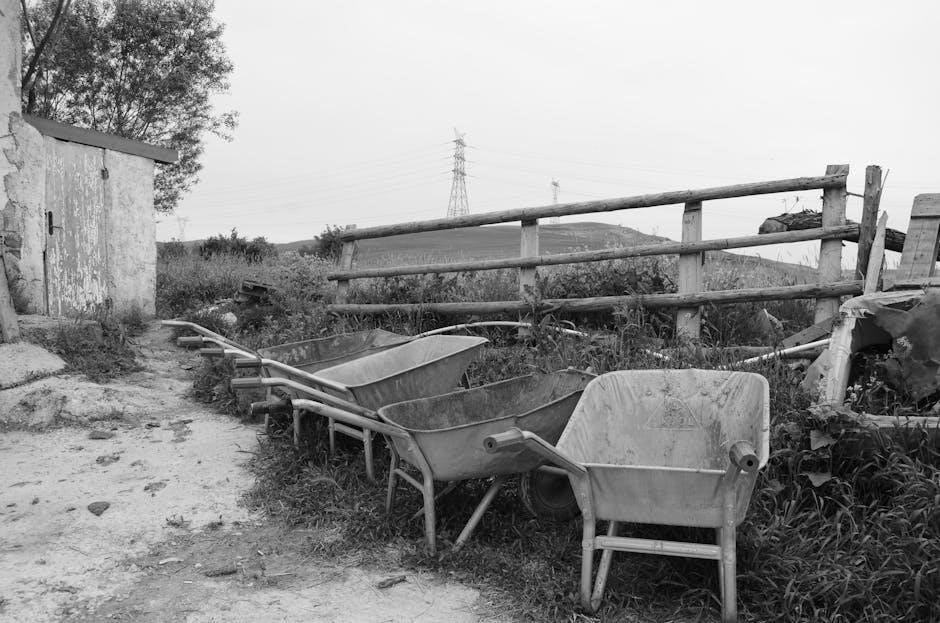
Access to his work, including PDFs of collections like those published by New Directions, allows modern readers to connect with this historical moment and appreciate Williams’ revolutionary approach to poetry.
Williams’ Poetic Style and Modernism
William Carlos Williams stands as a central figure in American Modernist poetry, yet his style diverges from some of his contemporaries. While sharing Modernism’s rejection of Victorian poetic conventions, Williams championed a uniquely American voice, eschewing elaborate metaphors and embracing colloquial language. He famously advocated for “no ideas but in things,” prioritizing concrete imagery and direct observation over abstract philosophical concepts.
His poetry is characterized by its brevity, simplicity, and focus on the everyday. He employed variable line lengths and a lack of traditional rhyme schemes, creating a visual and rhythmic effect that mirrored the fragmented nature of modern experience. This minimalist approach is strikingly evident in “The Red Wheelbarrow,” where a few carefully chosen details convey a profound sense of significance.
Williams’ commitment to representing American life authentically led him to depict ordinary objects and scenes with meticulous detail. He believed that beauty could be found in the commonplace, and that poetry should reflect the rhythms and textures of everyday speech. This aesthetic aligns with the broader Modernist impulse to break from tradition and explore new forms of expression.
Studying “The Red Wheelbarrow” in PDF format, alongside critical analyses, reveals how Williams’ stylistic choices contribute to the poem’s enduring power and its place within the Modernist canon.
The Text of “The Red Wheelbarrow”
The poem, remarkably concise, consists of just sixteen words arranged in four short lines. Its complete text reads: “so much depends / upon a red wheel / barrow glazed with rain / water beside the white / chickens.” This seemingly simple arrangement belies a depth of symbolic resonance that has captivated readers for decades.
The deliberate line breaks and spacing contribute significantly to the poem’s rhythm and visual impact. The enjambment – the continuation of a sentence or phrase from one line to the next – creates a sense of fluidity and emphasizes the interconnectedness of the elements described. The poem’s structure mirrors the visual arrangement of the scene itself.
Accessing the poem in PDF format, as provided by sources like the Academy of American Poets, allows for close textual analysis. Readers can easily annotate the text, examining the significance of each word and its placement within the overall composition. The poem’s brevity invites repeated readings and encourages a careful consideration of its subtle nuances.
The availability of the poem in digital formats, including PDF, ensures its continued accessibility and facilitates scholarly engagement with this cornerstone of Modernist poetry.
First Publication and Collection: Spring and All

“The Red Wheelbarrow” initially appeared as part of William Carlos Williams’ larger work, Spring and All, published in 1923 by Contact Publishing. This extended poem, a significant piece of Modernist literature, served as a platform for Williams to articulate his poetic principles and explore new forms of expression. The inclusion of “The Red Wheelbarrow” within this context is crucial to understanding its intent.
Spring and All is often available in PDF format through various academic databases and online booksellers, allowing readers to experience the poem alongside Williams’ accompanying prose statements on poetics. These statements illuminate his focus on direct treatment of the “thing” itself, a principle vividly demonstrated in “The Red Wheelbarrow.”
New Directions Publishing later reprinted Spring and All, making the poem more widely accessible. Digital versions, often in PDF, preserve the original formatting and contextualize “The Red Wheelbarrow” within the broader scope of Williams’ artistic vision. Studying the poem within its original collection reveals its integral role in Williams’ larger project.
The PDF format allows for easy comparison between the poem and Williams’ theoretical writings, enhancing comprehension of his innovative approach to language and imagery.
The Inspiration Behind the Poem: Elsie
The enduring mystery surrounding “The Red Wheelbarrow” centers on its inspiration: Elsie, the previously “forgotten man” who owned and utilized the wheelbarrow. Recent discoveries, detailed in The New York Times, have brought Elsie’s identity into sharper focus, revealing him as a vital, though previously unacknowledged, figure in the poem’s genesis.

Understanding Elsie’s role adds a layer of human context to the seemingly simple imagery. While the poem itself doesn’t explicitly mention Elsie, knowing he existed and tended the garden where Williams observed the scene profoundly alters its interpretation. Accessing articles detailing this discovery, often available as PDFs online, enriches the reading experience.
Scholarly analyses, frequently found in PDF format through academic databases, now incorporate Elsie’s story, exploring how Williams’ observation of a working man and his tools contributed to the poem’s themes of labor, dependence, and the beauty of the everyday. The poem’s power lies in its ability to elevate the mundane.
PDF resources offer a concentrated space to explore the connection between the poem’s imagery and the real-life figure who inspired it, deepening appreciation for Williams’ observational skills.
Elsie’s Role and Identity – The “Forgotten Man”
For decades, the individual behind the red wheelbarrow remained anonymous, a “forgotten man” whose existence was only implied by William Carlos Williams’ iconic poem. Recent investigations, highlighted in publications like The New York Times, have unveiled Elsie’s identity, adding a crucial human dimension to the poem’s enduring appeal.
Elsie wasn’t merely a background figure; he was the active agent tending the garden, the owner of the wheelbarrow, and the embodiment of everyday labor. Understanding his role shifts the focus from purely aesthetic considerations to the lived experience that inspired Williams’ observation. PDF articles detailing this discovery provide valuable context.

The term “forgotten man” aptly describes Elsie’s historical obscurity, overshadowed by the poem’s fame; Now, accessing biographical information – often compiled in downloadable PDF reports – allows readers to acknowledge his contribution and appreciate the poem’s grounding in reality.
Scholarly PDFs explore how Williams’ choice to focus on such a seemingly insignificant scene, and by extension, Elsie’s work, elevates the ordinary and challenges conventional poetic subjects. Elsie’s story is now interwoven with the poem’s legacy.
Visual Imagery in the Poem: Color and Texture

The poem’s power resides in its stark, precise visual imagery, particularly the interplay of color and texture. The “red wheelbarrow” immediately commands attention, its vibrant hue contrasting with the surrounding environment. This visual impact is often emphasized in critical analyses available as downloadable PDF documents.

“Glazed with rain water” introduces a crucial textural element, transforming the wheelbarrow’s surface into something reflective and dynamic. The sheen of water alters its appearance, adding depth and complexity to the image. PDFs dedicated to poetic analysis frequently dissect this detail.
The juxtaposition of the red wheelbarrow with “white chickens” further enhances the visual contrast. The stark whiteness of the chickens accentuates the redness of the wheelbarrow, creating a striking visual balance. These elements are often highlighted in PDF study guides.
Williams’ minimalist approach forces the reader to actively engage with these visual details, constructing a vivid mental picture. Accessing the poem and accompanying critical essays in PDF format allows for close reading and a deeper appreciation of its sensory richness.
The Significance of “So Much Depends Upon”
The opening phrase, “so much depends upon,” is arguably the most crucial element of William Carlos Williams’ poem, immediately establishing a sense of weighty importance attached to seemingly mundane objects. Critical interpretations, readily available in PDF format, consistently explore this profound statement.

This declaration isn’t explicit about what depends, creating ambiguity and inviting readers to contemplate the interconnectedness of life and the significance of everyday experiences. PDFs dedicated to literary analysis often delve into the philosophical implications of this opening line.
The poem suggests that even simple things – a red wheelbarrow, rainwater, white chickens – hold a vital role in the larger scheme of existence. This notion challenges conventional notions of importance and value, a theme frequently discussed in scholarly PDFs.
Williams elevates the ordinary to the extraordinary, prompting us to reconsider our perceptions of the world around us. Accessing the poem alongside critical essays in PDF format provides a comprehensive understanding of this central theme and its enduring resonance.
Rainwater as a Symbol
The “rainwater” glazing the red wheelbarrow transcends a mere descriptive detail; it functions as a potent symbol within William Carlos Williams’ concise poem. Numerous critical analyses, often found in accessible PDF formats, dedicate significant attention to deciphering its layered meanings.
Rainwater frequently represents cleansing, renewal, and the life-giving force of nature. In the context of the poem, it suggests a revitalization of the commonplace, imbuing the wheelbarrow with a fresh, almost sacred quality. PDFs exploring symbolism highlight this interpretation.
Furthermore, the “glazed” effect implies a delicate sheen, a transient beauty that emphasizes the ephemeral nature of existence. This fleeting quality reinforces the poem’s focus on the present moment and the importance of appreciating simple things. Scholarly PDFs often discuss this aspect.
The rainwater also connects the wheelbarrow to the broader natural world, linking it to cycles of growth and decay. Examining the poem and related analyses in PDF format reveals a nuanced understanding of this symbolic interplay and its contribution to the poem’s overall impact.
The White Chickens: Symbolism and Contrast
The inclusion of “white chickens” alongside the red wheelbarrow isn’t arbitrary; they contribute significantly to the poem’s symbolic weight and visual impact. Critical analyses, readily available as PDFs, consistently address the chickens’ role in creating a compelling contrast.
White often symbolizes purity, innocence, and new beginnings. Their presence juxtaposed with the utilitarian red of the wheelbarrow creates a dynamic tension, suggesting a harmony between the mundane and the ethereal. PDFs dedicated to poetic symbolism emphasize this interplay.
The chickens also represent domesticity and the cycle of life, hinting at the farm setting and the interconnectedness of rural existence. This grounding element balances the abstract qualities of the rainwater and the wheelbarrow itself. Scholarly PDFs explore this contextual significance.
Moreover, the stark contrast in color – red against white – draws the reader’s eye and reinforces the poem’s minimalist aesthetic. Accessing the poem and related interpretations in PDF format allows for a deeper appreciation of how these visual elements contribute to its enduring power.
Critical Interpretations of the Poem
Numerous critical interpretations of “The Red Wheelbarrow” exist, often accessible through scholarly articles and analyses compiled in PDF format. These interpretations range from seeing the poem as a celebration of everyday objects to viewing it as a meditation on the relationship between humanity and nature.
Many critics, as detailed in downloadable PDFs, focus on the poem’s imagistic quality and its rejection of traditional poetic forms. William Carlos Williams’ modernist style, emphasizing concrete details over abstract concepts, is a central point of discussion.
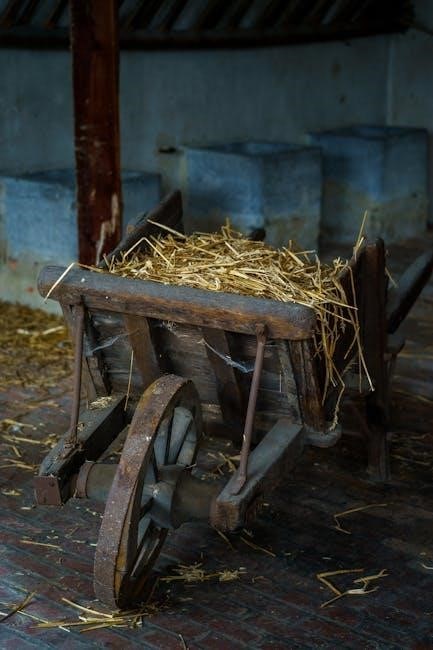
Some interpretations, found within critical analyses in PDF form, suggest the poem represents a moment of epiphany, where the speaker recognizes the profound significance of seemingly insignificant things. The “so much depends upon” line is frequently cited as evidence of this.
Furthermore, PDFs often explore the poem’s connection to Williams’ medical practice, arguing that his observations of patients and the human body informed his poetic vision. The availability of these resources in PDF format allows for comprehensive study and a nuanced understanding of the poem’s multifaceted meanings.
The Poem’s Form and Structure: Minimalist Poetry
“The Red Wheelbarrow” exemplifies minimalist poetry through its concise language and deliberate lack of traditional poetic devices. The poem’s structure, readily available for study in PDF versions, consists of only sixteen words arranged in three short lines, creating a stark and impactful visual presentation.
This minimalist approach, often analyzed in PDF critical essays, reflects William Carlos Williams’ commitment to capturing the essence of experience without embellishment. The poem eschews rhyme, meter, and elaborate figurative language, focusing instead on precise imagery.
The poem’s fragmented syntax and enjambment, easily observed in PDF reproductions of the text, contribute to its sense of immediacy and realism. Each word is carefully chosen and weighted, demanding close attention from the reader.
PDF resources dedicated to Williams’ work frequently highlight how this minimalist form mirrors the simplicity and directness of the objects it describes. The poem’s power lies not in what it says, but in what it shows, a characteristic emphasized in scholarly PDFs exploring modernist aesthetics.
Availability of the Poem in PDF Format
“The Red Wheelbarrow” is widely accessible in PDF format through numerous online resources, catering to students, researchers, and poetry enthusiasts. The Academy of American Poets website provides access to the poem, often downloadable or easily saved as a PDF for offline study.
Furthermore, critical analyses and scholarly articles dissecting the poem’s symbolism and historical context are frequently published as PDFs. Websites dedicated to literary criticism, like those indexing poetry resources, offer a wealth of downloadable PDFs examining Williams’ work.
New Directions Publishing, the publisher of William Carlos Williams’ collected poems, may offer selections, including “The Red Wheelbarrow,” in PDF preview formats or as part of larger digital collections. Educational institutions often provide curated PDF packets for classroom analysis.
Searching online databases and digital libraries using keywords like “The Red Wheelbarrow PDF” or “William Carlos Williams PDF” yields numerous results, ranging from simple text versions to annotated scholarly editions. These PDFs facilitate in-depth exploration of this iconic poem.
Educational Use and Analysis in Schools
“The Red Wheelbarrow” frequently appears in school curricula, particularly in courses focusing on Modernist poetry and American literature. Its brevity and deceptively simple language make it an ideal text for introducing students to imagism and minimalist poetic forms.
Teachers often utilize PDF versions of the poem, readily available online, for classroom distribution and annotation. These PDFs can be supplemented with critical analyses, also often found in PDF format, to guide student interpretation and discussion.
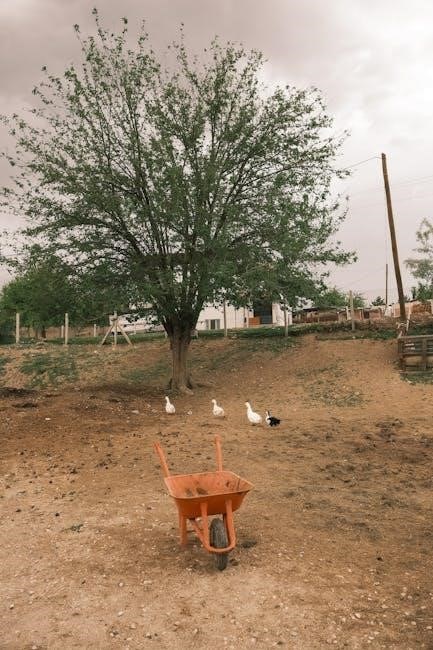
Analysis typically centers on the poem’s vivid imagery – the red wheelbarrow, rainwater, and white chickens – and the significance of the opening phrase, “so much depends upon.” Students explore the poem’s potential meanings, considering the context of Williams’ life and artistic philosophy.
Classroom activities may include close reading exercises, creative writing prompts inspired by the poem’s imagery, and research into the historical and biographical background. The poem’s accessibility encourages diverse interpretations and fosters critical thinking skills. PDF resources streamline these educational endeavors.
Legacy and Influence of “The Red Wheelbarrow”
“The Red Wheelbarrow” has secured its place as one of the most recognizable and frequently anthologized poems in American literature, profoundly influencing subsequent generations of poets. Its impact extends beyond academic circles, permeating popular culture and artistic expression.
The poem’s minimalist aesthetic and focus on everyday objects paved the way for a more democratic and accessible poetry, challenging traditional poetic conventions. Its emphasis on concrete imagery and precise language continues to inspire contemporary poets seeking to capture the essence of lived experience.
Digital accessibility, particularly through PDF formats of the poem and related critical analyses, has broadened its reach and facilitated ongoing scholarly engagement. Online resources allow students and enthusiasts worldwide to explore its nuances and significance.
New Directions Publishing, consistently reprinting Williams’ work, ensures the poem’s continued availability. The enduring power of “The Red Wheelbarrow” lies in its ability to evoke profound meaning from seemingly mundane details, solidifying its legacy as a cornerstone of Modernist poetry, readily available in PDF form for continued study.